
Arduino Mega - Buzzer
This guide teaches you how to use the Arduino Mega to make a 12V active buzzer loud. If you need to work with a 5V active or passive buzzer, read our Arduino Mega Piezo Buzzer tutorial.
Hardware Preparation
Or you can buy the following kits:
| 1 | × | DIYables Sensor Kit (18 sensors/displays) |
Additionally, some of these links are for products from our own brand, DIYables .
Overview of 12V Active Buzzer
The 12V active buzzer makes a loud sound, good for alarm systems.
Pinout
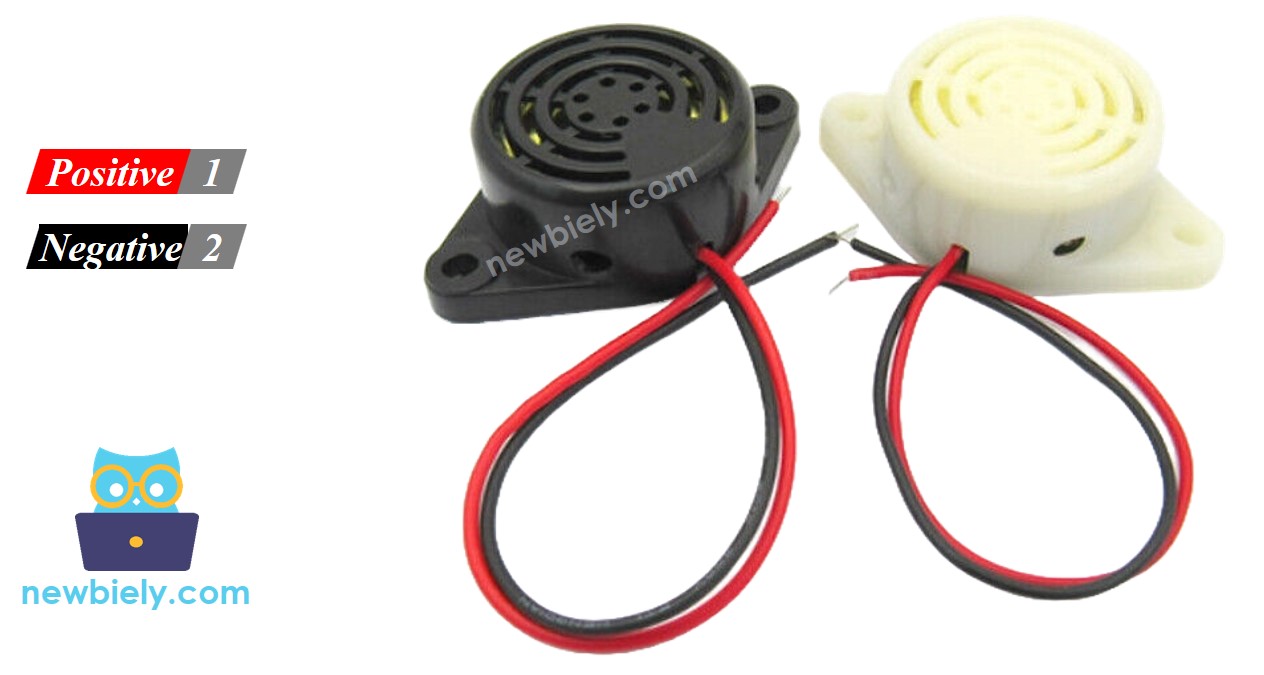
A 12-volt active buzzer usually has two pins.
- Connect the black wire to the power supply's ground (GND).
- Connect the red wire to the power supply's +12V output.
How to Control 12V Active Buzzer
When a 12V active buzzer gets power from a 12V supply, it makes a sound. To run a 12V active buzzer with an Arduino Mega, put a relay between them. The Arduino Mega can turn the buzzer on and off through this relay. If you don't know much about relays (pin layout, how they work, or how to program them), check the Arduino Mega relay tutorial.
Wiring Diagram
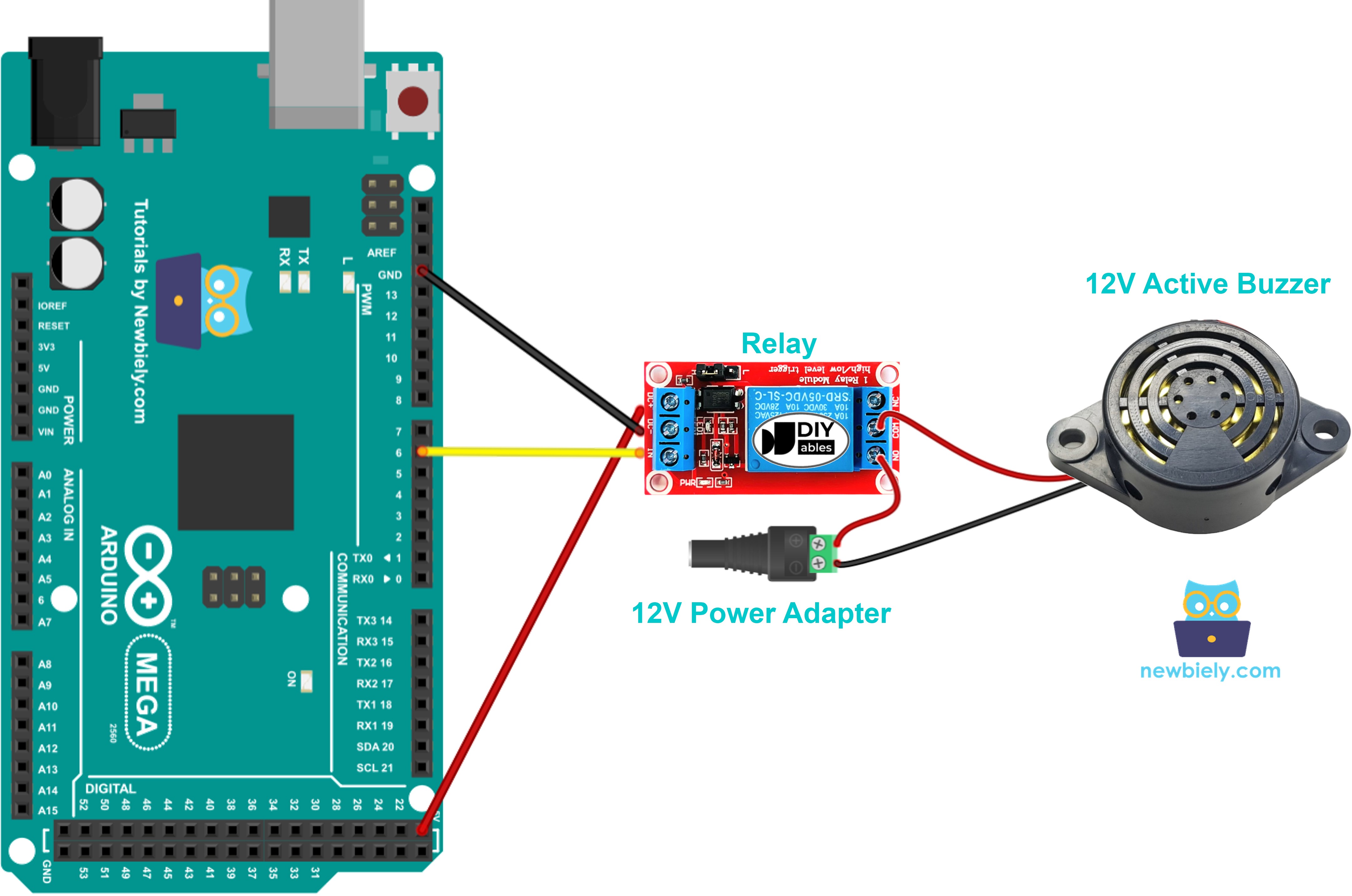
This image is created using Fritzing. Click to enlarge image
Arduino Mega Code
The code makes the 12V buzzer stay on for two seconds, then off for five seconds, and repeats.
Detailed Instructions
Follow these steps one by one.
- Connect the parts as shown in the diagram.
- Connect the Arduino Mega board to your computer with a USB cable.
- Open the Arduino IDE on your computer.
- Choose the correct board (Arduino Mega) and the COM port.
- Paste the code into the Arduino IDE.
- Click the Upload button in the Arduino IDE to send the code to your Arduino Mega.
- Listen to the sound from the 12V active buzzer.
Code Explanation
The explanation is in the comments in the Arduino code shown above.